
Case study · Athlete · VO₂ max test
Fran Bell: A return to structure
A 65 VO₂ max and two well-developed thresholds built on almost no data habits. What the test told an athlete who trains by feel.
Test by Dale Smith · Words by Arne Dumez · 28 October 2026
VO₂ max
65.3ml/kg/min
Percentile
99th
top 1% of women aged 18 to 29
Ramp to peak
15:01min
Max heart rate
193bpm
Fran Bell
- Age
- 26
- Based in
- Saltburn-by-the-Sea
- Work
- Midwife
- Sport
- Triathlete, cyclist and runner
- Test
- VO₂ max test · treadmill · 30 September 2026
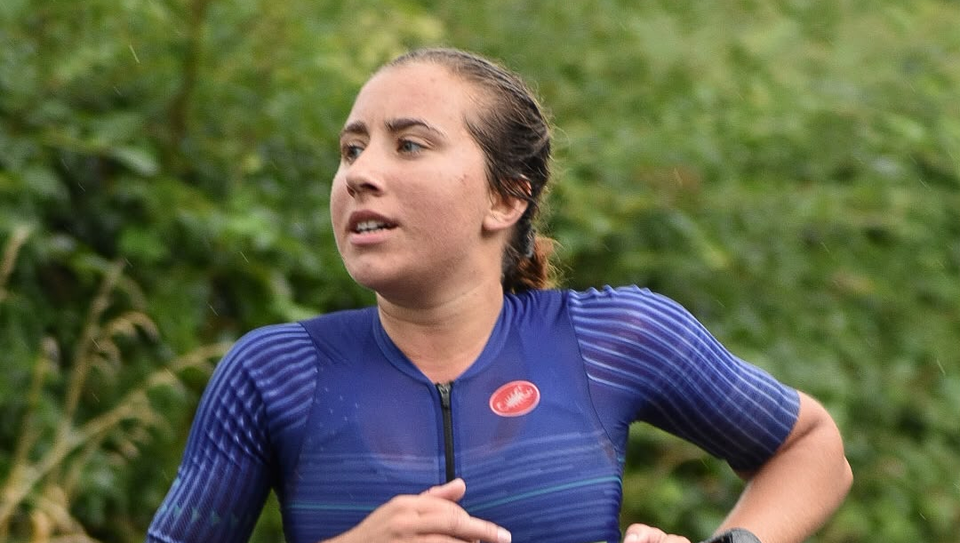
Rebuilding consistency and structure in run training after a year of bike mileage, ahead of a marathon debut at Milan 2027.
Meet Fran
Fran is what you’d call a local hero. One of Saltburn’s finest. Now 26 and working as a midwife, she started her endurance journey in athletics as a promising junior. After a few years away from the sport spent on ski seasons, mountain bike adventures and odd jobs, she came back to Saltburn and threw herself in the deep end. Maybe it was her father’s inspiration, maybe it was a desire for a challenge, but in 2022 she completed her first Ironman 70.3.
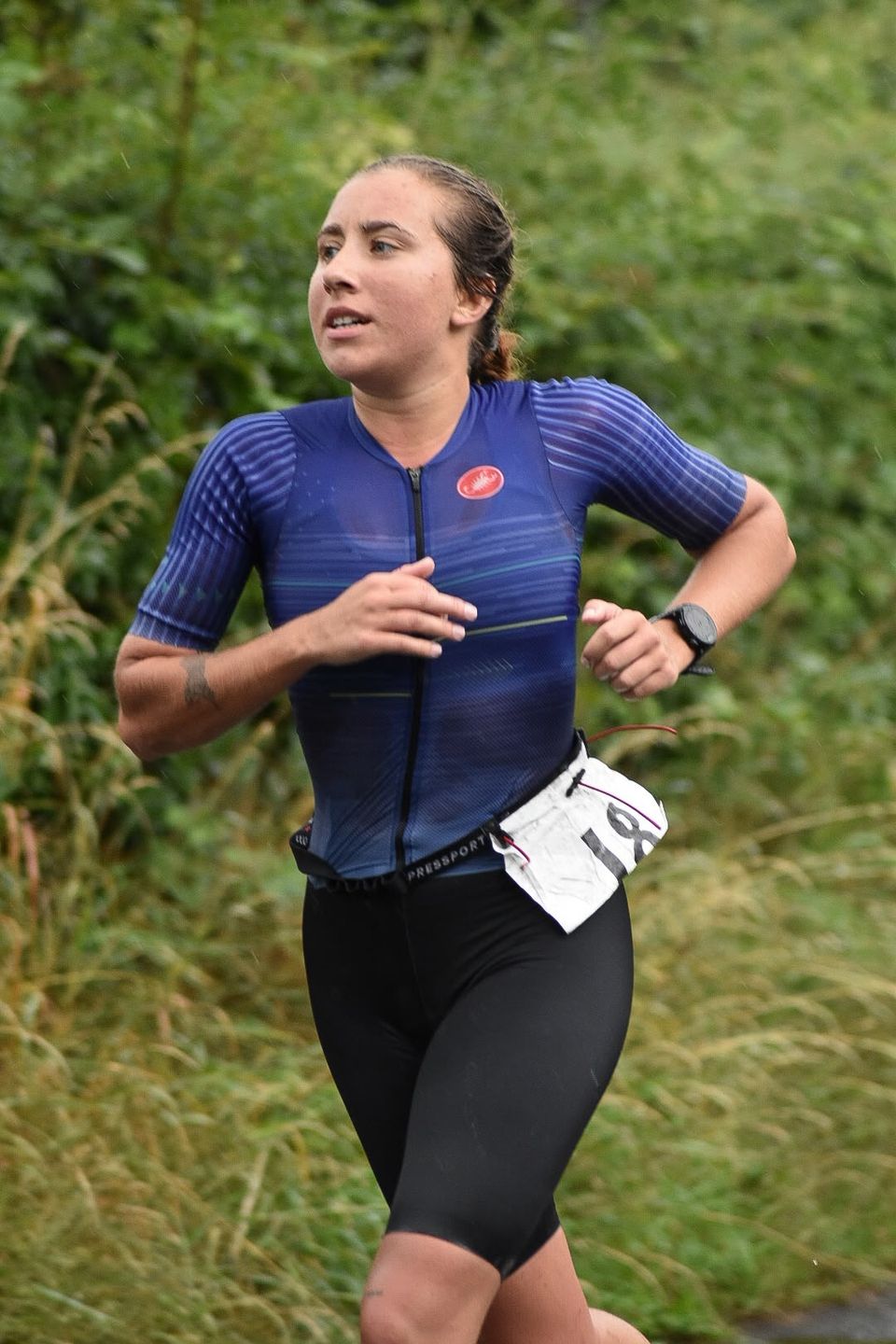
Since then, she’s been splitting her time between triathlon, cycling and running. Her track record now includes a 5th place at Ironman 70.3 Bolton and a 1:25:56 half marathon at the Brass Monkey Half. Both came off the back of consistent, structured and “satisfying” training blocks.
Since that half marathon PB in January 2026, she confesses her training has lacked consistency. Her training log shows high cycling volume which includes hard efforts, good streaks and several races, but she points to a lack of direction. On the running front, there has been the odd run here and there, but no “quality work”, in her own words.
It only took a handful of intervals to trigger a rebirth in motivation. Shortly after her first session back, she signed up for Milan Marathon 2027: her debut over the distance. She knows what has worked in the past. It’s time to return to consistent, structured and satisfying training.
The data paradox
Fran is what many would call a refreshing anomaly these days. In an era where many struggle with “Stravanoia” and information overload, she seems completely unburdened by the weight of training data. She keeps it simple.
She has a Garmin running watch, but it’s very old, and she often forgets to wear it for her runs. Even when she does, it’s often covered by her sleeve and ignored. It has wrist-based HR functionality, but more often than not, she doesn’t wear it tight enough for it to work. She records her cycling training on her bike computer, but her winter bike doesn’t have a power meter.
However, there is one thing that does preoccupy her: her menstrual cycle. She fully understands its effects on her physiology, her training and her performance, and she tracks it almost purely on feel. She says what she’s done so far works for her, and looking at her track record, you’d be hard pressed to argue.
This creates a data paradox. At EnduroLiving, we believe data can empower people to make decisions that move the needle and build productive habits. In Fran’s case, she is already making good decisions and has already built good habits without much data. That’s a real credit to Fran’s instincts and athlete nous, and it reinforces our message that data can never replace good judgement and common sense.
So, for Fran, measuring data like HRV, resting heart rate, training load and sleep wouldn’t provide a foundation for decision-making, but it would add an additional layer of information that could confirm, or challenge, her physical sensations.
“I feel like I know more than a WHOOP or anything could tell me about where I’m at in my cycle, how I’m recovering, what I need to be doing that day.”
Fran's VO2 max test
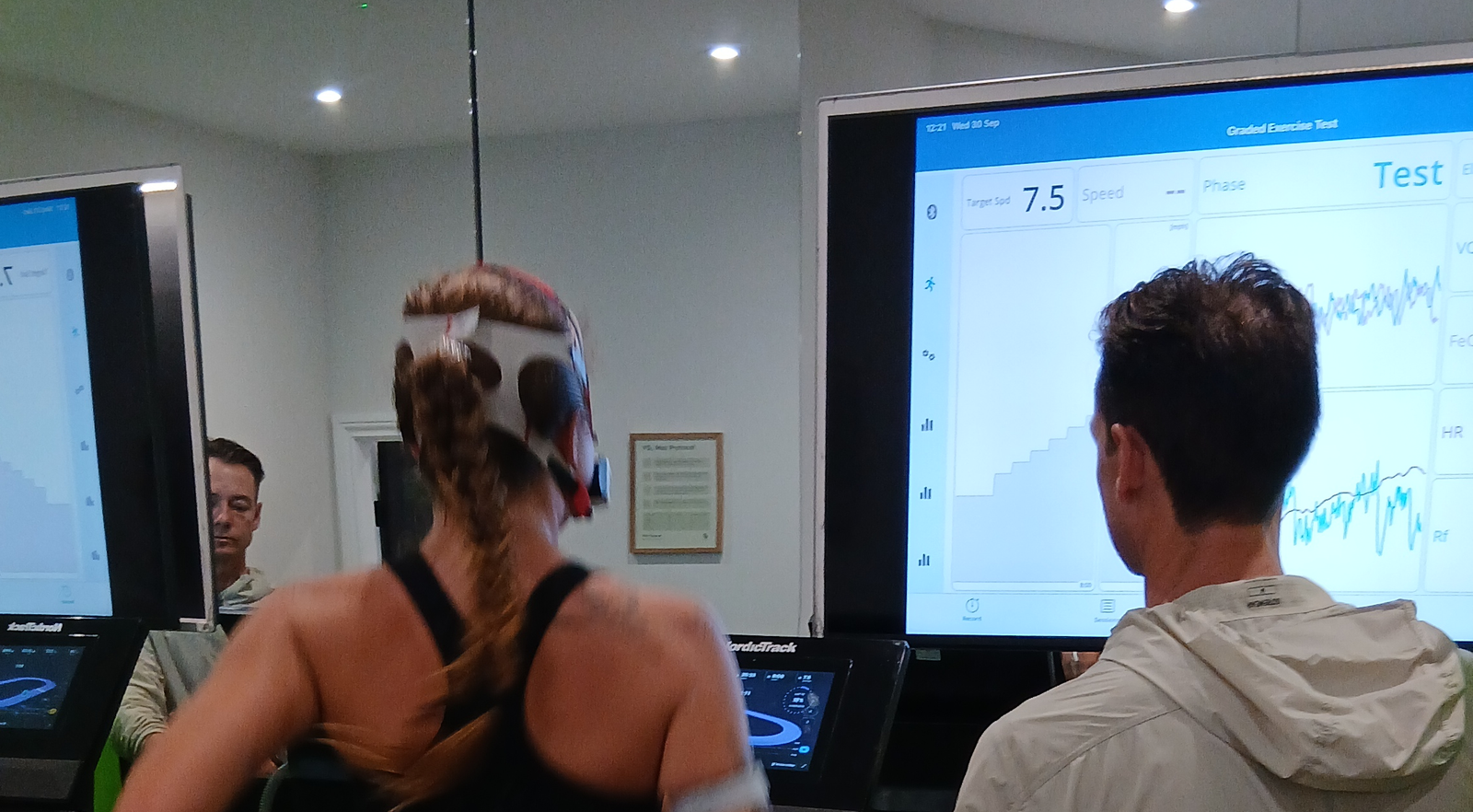
This wasn’t Fran’s first rodeo. She had done a few of these tests before, both on the bike and on the treadmill, and she was anticipating a familiar pattern in the results. She expected to feel great until a given intensity when she would “fall off a cliff” very quickly. In other words, she felt that this year’s bike work had set her up well for the lower intensity zones on the run, but that sustained effort in the higher zones would quickly take its toll on her.
The headline number tells us what we already knew: she’s got a fantastic engine. With a VO₂ max of 65.3, Fran’s aerobic ceiling is higher than 99% of women aged 18 to 29.
But apart from a high aerobic ceiling, what did the test show?
The engine
VO₂ max
65.3ml/kg/min
higher than 99% of women aged 18 to 29
Ramp to peak
15:01min
Max heart rate
193bpm
Well-developed thresholds
Now that we know the size of the engine, it’s about looking at the gearbox: the two thresholds.
The first threshold, known as Lactate Threshold 1 (LT1), is the upper limit of fully conversational, fat-fuelled aerobic effort. In other words, it’s where we go from low-intensity endurance jogging to an effort that will steadily accumulate fatigue and burn fuel much faster. The second threshold, LT2, is where athletes start accumulating lactate at an exponential rate. Once we tip over this second breakpoint, we shift into a very hard effort that can only be sustained for 20 to 60 minutes, depending on experience and fatigue levels.
Here is what Fran's thresholds look like:
LT1
- Time in ramp
- 9:31
- VO₂
- 52.9 ml/kg/min
- Heart rate
- 167 bpm
- % of VO₂ max
- 81%
- % of max HR
- 87%
The top of easy, fat-fuelled running. Above this, fatigue starts to build and fuel burns faster.
LT2
- Time in ramp
- 12:41
- VO₂
- 60.9 ml/kg/min
- Heart rate
- 180 bpm
- % of VO₂ max
- 93%
- % of max HR
- 93%
Where lactate climbs fast. Effort at this intensity can be held for around 20 to 60 minutes, depending on fitness and conditioning.
“I think I’ll be fine, fine, fine, and manage really well, and then there’ll be a point where I’ll start to decline really quickly and struggle. And it’ll all happen quite fast.”
A well-conditioned system
What happens after the test ends is equally important. How quickly your heart rate falls once you stop is one of the clearest windows into your autonomic health. The speed of that drop measures how fast the nervous system switches out of the “stress” state that drives hard effort and back into the “recovery” state that repairs and adapts. A faster fall tends to signal a fitter, more resilient system.
Fran’s heart rate dropped by 24 bpm in the first minute of her cool down, 50 bpm in the second minute, and 60 bpm after three minutes, bringing her back down to a comfortable 134 bpm. All of this tells us that Fran is well-conditioned, healthy, and accustomed to spikes and sustained rises in heart rate. It’s almost as if she’s been doing this endurance sports thing for a while.
Heart-rate recovery after peak
−24
1 min
−50
2 min
−60
3 min
Back to 134 bpm after three minutes.
Fran’s opportunities for improvement
So, what do these numbers tell us about Fran’s training going forward? She has ambitions of a marathon debut in spring 2027, so how can she best prepare for it in the months ahead?
- 1
Raise her aerobic efficiency so that LT1 sits higher in relation to max heart rate.
By spending time training just under or at LT1 heart rate (about 165 to 170 bpm), Fran can work on pushing her LT1 higher so that she gives herself more room to play with before lactate starts accumulating steadily. This is absolutely key in marathon preparation.
- 2
Develop LT2 even further.
An anaerobic threshold that sits at 93% of max heart rate is very impressive, but this can be developed even further with targeted sessions. This will be key in the months leading up to the marathon block and remain relevant during it. Sessions that target LT2 accumulate more fatigue than LT1-focused training, so they need to be tailored to be complementary, not overbearing.
- 3
Mind the gap.
There is a gap of 13 bpm between Fran’s LT1 and LT2. That gap is what is often called zone 3 or “the grey area”, and it can be a double-edged sword. It is a very productive zone for tempo sessions that bolster aerobic efficiency. It is also where Fran can leak energy and accumulate unnecessary fatigue if she drifts into it during easier efforts. Keep heart rate well below 160 bpm on easy days to avoid this.
The way forward
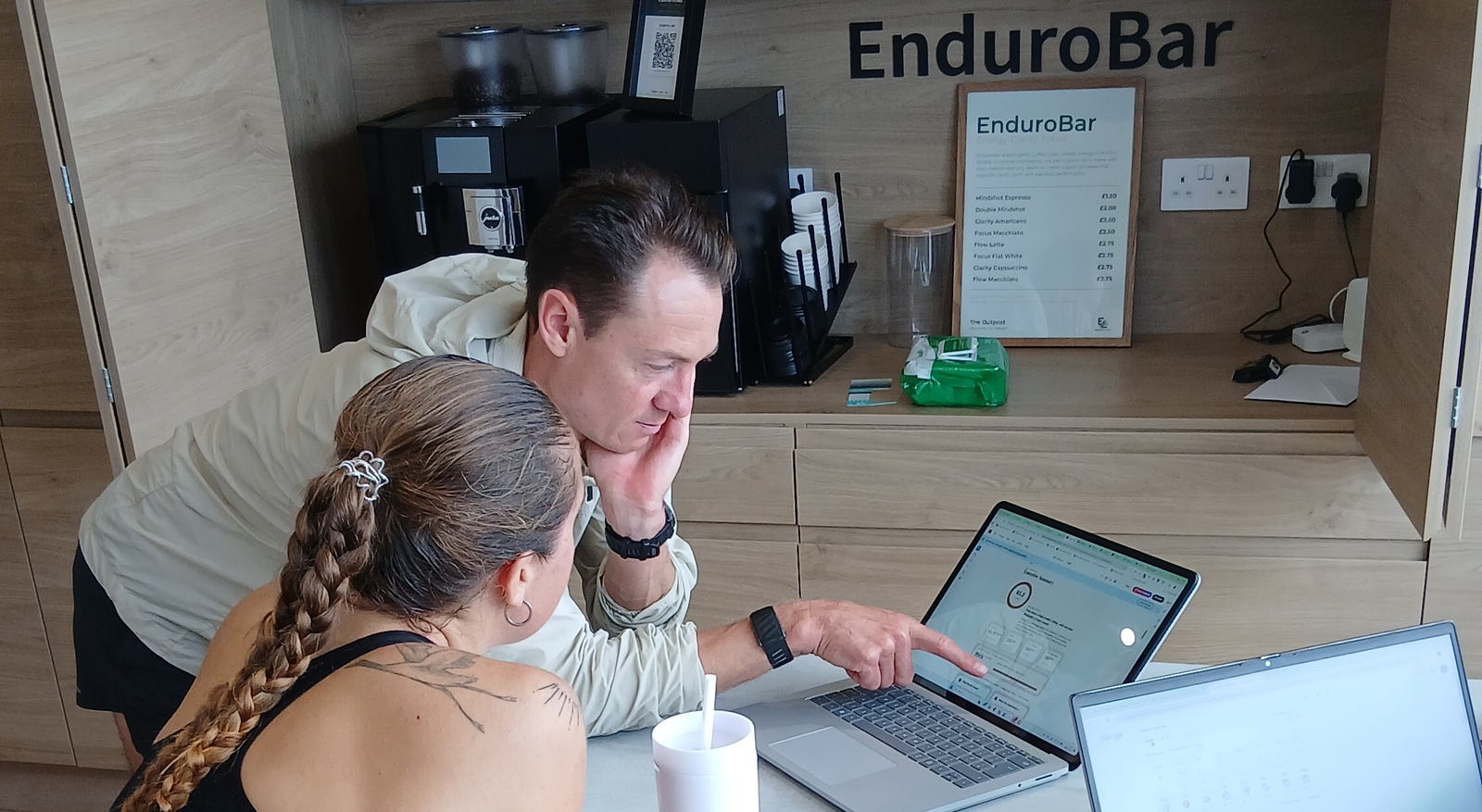
Based on all of this, our recommendation to Fran would be to invest in a reliably accurate heart rate monitor so that she can keep a watchful eye over her heart rate during her training. It’s not about substituting her finely tuned instincts and physical sensations with numbers on a watch face, it’s about trusting but verifying them with honest, neutral feedback.
The five training zones below were designed for her based on her test results, and should provide her with everything she needs to plan her prep.
Her system is already in a good place to start hard work, so our advice to Fran at this point in time is to spend the vast majority of training volume in zones 1 and 2 and keep the remaining targeted work in zones 3 and 4. It’s far too early to start targeted marathon training for April 2027, but she can spend the next few months building a solid base, both physiologically and biomechanically, to work off when 2027 rolls around.
Zone 1: Recovery
< 135 bpm< 70% max HR
Very easy, fully conversational
Active recovery and blood flow without adding training stress.
Zone 2: Endurance
135–167 bpm70–87% max HR
Easy, conversational
Builds the aerobic base, mitochondrial density and fat oxidation. Most weekly volume belongs here.
Zone 3: Tempo (grey zone)
168–176 bpm87–91% max HR
Comfortably hard, limited talking
Builds aerobic capacity, but carries a high fatigue cost if it becomes the default rather than a deliberate choice.
Zone 4: Threshold
177–180 bpm92–93% max HR
Hard, controlled discomfort
Sustainable hard effort right at LT2. Raises the threshold ceiling, used in small, structured doses.
Zone 5: VO₂ max
> 180 bpm> 93% max HR
Maximal, short intervals only
Raises the aerobic ceiling and anaerobic capacity. Short intervals, full recovery between efforts.
Where the training time goes
“This is going to be a bit of a kick up the bum to be like: "Right, you need to start your training out and have a bit of direction with it." I do think I thrive better when I’m in a more structured plan.”
Next time
We hope Fran enjoyed the experience and found real value in these insights. We look forward to her follow-up test in a few months and will absolutely be keeping an eye on her training as she returns to structure.
Next test A follow-up test in early 2027, before the marathon block begins.
Your numbers next
Find out what you're made of.
Every case study starts with one test at The Outpost in Saltburn-by-the-Sea. Questions about this one, or want your own? Reach out online or in person.